
Most Denver landlords begin the selling rental property process by asking what their home will list for. The more useful first question is: after tax, how much do I actually keep? For investment properties held longer than a year, federal capital gains tax, Colorado state income tax, and IRS depreciation recapture can collectively reduce gross proceeds by 25 to 35 percent depending on your income bracket and how long you owned the property.
Understanding those obligations before listing — not after accepting an offer — changes how you evaluate price, timing, and exit strategy. A landlord who completes the tax math early may discover that a 1031 exchange, an installment sale, or a charitable giving strategy produces a better outcome than a straightforward sale, even if the gross sale price is identical.
Cash For Homes Now consults with Denver rental property owners on the financial side of investment exits, and tax posture is consistently one of the most underplanned aspects of the transaction. This article explains the core tax concepts that apply to Colorado rental sales so you can have an informed conversation with your CPA before setting a list price.
How Capital Gains Tax Applies to Denver Investment Properties
When you are selling rental property in Denver for more than you paid for it, the IRS taxes that gain. The rate depends on how long you owned the asset and your total taxable income for the year. Properties held for more than 12 months qualify for long-term capital gains rates, which are 0, 15, or 20 percent federally depending on your filing status and income level.
Colorado adds a flat state income tax on capital gains, which applies to investment property sales in addition to federal obligations. High-income sellers in Colorado can face a combined federal and state effective rate that meaningfully reduces the net benefit of a high sale price if the tax exposure is not planned around.
Your capital gain is calculated as the sale price minus your adjusted cost basis — not just what you originally paid. The cost basis includes your original purchase price, closing costs from the original acquisition, and the cost of capital improvements you made over the years. Keeping clean records of those improvements is one of the most practical ways Denver landlords reduce taxable gain on the back end.
| Quick Formula Capital Gain = Sale Price – Selling Costs – Adjusted Cost Basis. Adjusted Cost Basis = Original Purchase Price + Acquisition Costs + Capital Improvements – Accumulated Depreciation. |
Depreciation Recapture: The Tax Most Landlords Forget About
Every year that you rent a property, the IRS allows you to deduct a portion of the building’s value as depreciation — typically over a 27.5-year schedule for residential rental property. That deduction lowers your taxable income annually, which is one of the core tax advantages of owning a rental in Denver.
The catch is that when you sell, the IRS recaptures those depreciation deductions. Depreciation recapture is taxed at a maximum federal rate of 25 percent on the depreciation you claimed over the life of the investment, regardless of your regular capital gains bracket. For a Denver landlord who owned a property for 10 or 15 years and claimed depreciation throughout, recapture can represent a significant five-figure tax bill at closing.
Many sellers are surprised by this because depreciation recapture is a separate calculation from capital gains — it applies even if your sale price does not exceed your original purchase price in nominal terms. Working with a CPA who specializes in investment real estate before listing gives you accurate projections and enough time to explore strategies that reduce or defer the recapture obligation.
| Depreciation Recapture Example If you claimed $80,000 in total depreciation on a Denver rental over 10 years and sell the property, up to $80,000 of your gain is recaptured and taxed at 25% federally — a potential $20,000 obligation separate from standard capital gains rates. |
The 1031 Exchange: Deferring Tax by Reinvesting in Colorado or Beyond
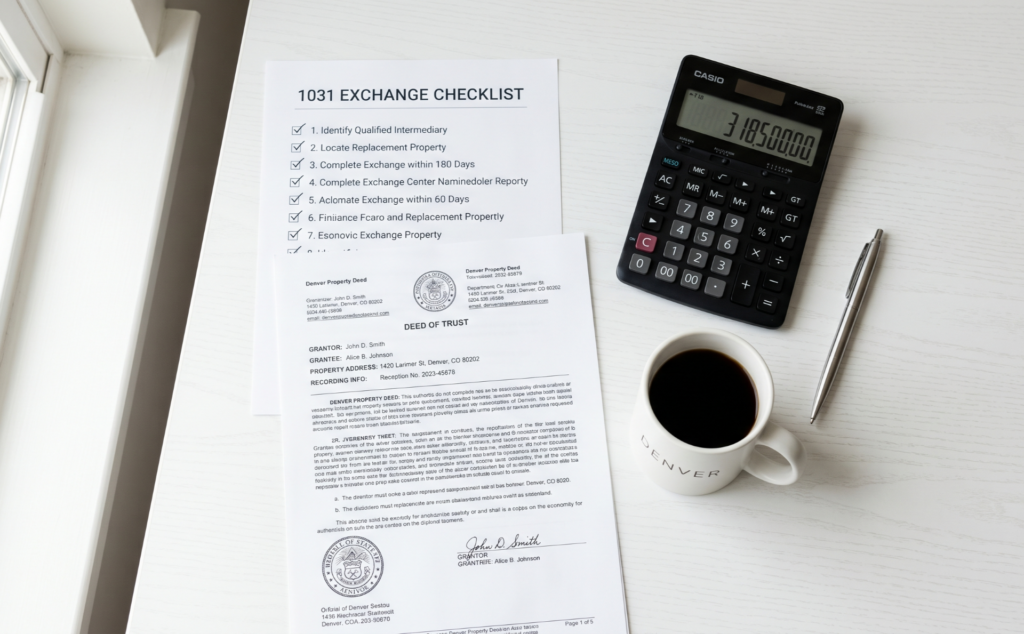
A 1031 exchange allows Denver rental property owners to sell one investment property and reinvest the proceeds into another like-kind investment property while deferring federal capital gains tax and depreciation recapture. The exchange does not eliminate the tax — it defers it indefinitely until a future sale that is not exchanged, or until the property passes through an estate.
The IRS imposes strict timelines on 1031 exchanges. You have 45 days from the closing of your sold property to identify potential replacement properties in writing, and 180 days to close on the replacement. Missing either deadline disqualifies the exchange and triggers the full tax liability for the original sale year.
Denver has seen strong investor demand for both multifamily and commercial real estate in recent years, and some landlords use a 1031 exchange to trade a single-family rental for a small apartment building or a portfolio of properties that generate stronger cash flow and diversify their holdings. Others exchange into properties in lower-cost markets outside Colorado to improve their cash-on-cash return after the exchange.
Installment Sales and Other Tax-Deferral Strategies
A 1031 exchange is not the only tool available to Denver landlords. An installment sale — where the buyer pays the purchase price over multiple years rather than in full at closing — allows you to spread the capital gain across those years, potentially keeping each year’s recognition in a lower tax bracket. This works especially well when the buyer is an individual or a smaller investment group rather than a large institutional buyer.
Charitable remainder trusts and qualified opportunity zone investments are two additional vehicles that can reduce or defer capital gains tax on Denver rental property sales. These tools involve more complexity and carry specific eligibility requirements, so they require careful planning with a tax professional and, in some cases, an estate attorney.
The key takeaway for Denver landlords is that capital gains tax is not a fixed cost — it is a variable that can be managed with the right preparation and professional guidance. Starting that conversation early, ideally six to twelve months before you plan to list, gives you the widest range of options.
Net Proceeds Worksheet: What Denver Landlords Should Calculate Before Listing
A realistic net proceeds estimate prevents the frustrating experience of accepting an offer that looks strong on the surface but underperforms after tax and closing costs are applied. Your worksheet should include the expected sale price, minus the agent commission (typically five to six percent), minus closing costs and title fees, minus any repair credits or concessions, minus mortgage payoff, and then separately apply the estimated capital gains tax and depreciation recapture.
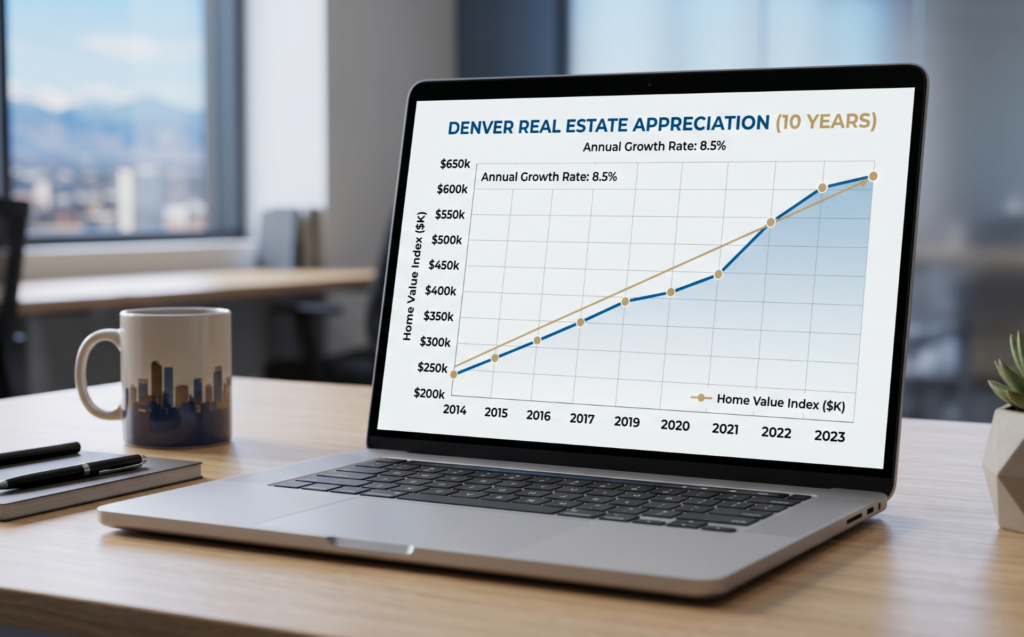
Colorado sellers also need to account for the withholding requirement on capital gains from real estate transactions that involves out-of-state buyers or certain entity structures. Your title company and closing attorney can clarify whether that applies to your specific transaction.
Cash For Homes Now helps Denver rental property owners build a complete net proceeds estimate before they commit to a listing strategy or accept a cash offer. That transparency is part of our consulting model — we want you to know exactly what you’re working with before you decide how to sell.
Working With Cash For Homes Now on Your Denver Rental Exit Strategy
Selling a rental property in Denver involves more moving parts than a standard residential transaction, and the tax dimension is one of the most consequential. Cash For Homes Now is a Denver-based real estate consulting firm that works with landlords across Denver, Greeley, Fort Collins, Loveland, and the broader Northern Colorado market to plan investment property exits that account for tax exposure from the start.
Our team can connect you with CPAs and real estate attorneys who specialize in 1031 exchanges and Colorado investment property sales. We also offer direct cash purchases for Denver landlords who want to close quickly, whether the property is vacant, tenant-occupied, or in need of significant repairs. Contact Cash For Homes Now for a no-pressure consultation and a realistic estimate of your net proceeds before you make any listing decisions.